
Two Sides of the Awards Coin: Tails You Win
by Pamela Alexander
It was 1984. I was working as a secretary in an MIT research lab, and when my phone rang I was sure it would be for the famous biologist who ran the place, or for one of his twenty or so postdocs.
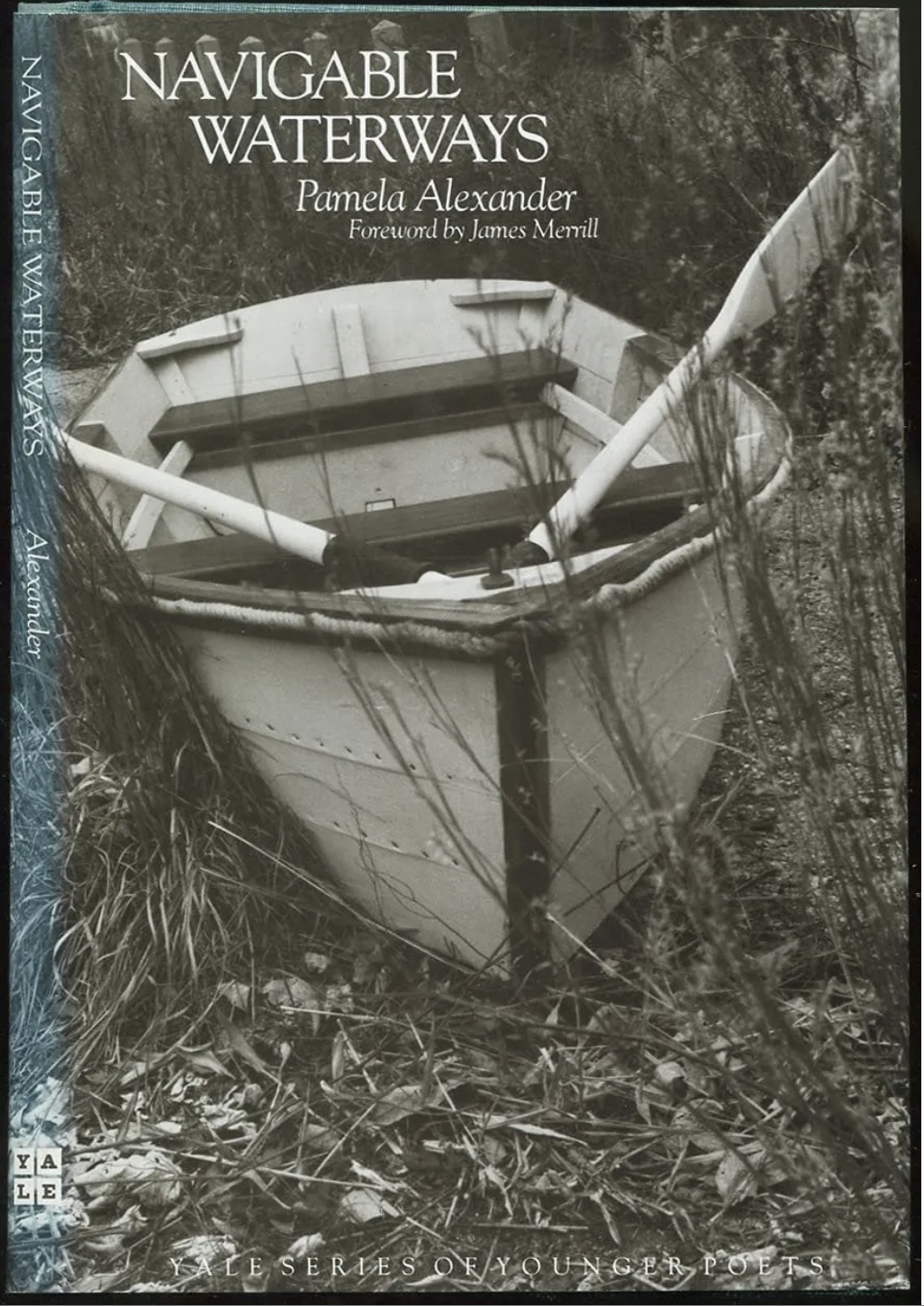
The call was for me. It was an editor at Yale University Press telling me I was the next Yale Younger Poet, my manuscript chosen by James Merrill. I was stunned. “You’re kidding!” I said. The editor took me seriously. “I am not kidding,” he snapped. “And whoever called all those poets last year and told them they’d won is a reptile.”
I felt high. I wandered around the lab telling scientists the news. Most of them asked, “Does that mean you’re going back to school?”
It meant that my first book would be published. (Just in time: I was 38, and the rules for the prize required the poet to be under 40.) It meant that a few weeks later the head of the MIT Writing Program would call to offer me a teaching position. Teaching! Another high, followed by a bad case of nerves.
I’d been submitting my manuscript for years. And it had already been accepted for publication—in the early 1970s, a few years after I’d earned an MFA from the University of Iowa and was working as a typist at a translation agency. A letter one fall told me my book would be coming out in the spring from one of a consortium of university presses. I was thrilled and spent the winter feeling like a “real” poet. At Iowa we were told that we should go back to whatever we were doing before, that an MFA would do nothing to change our lives. But I’d gotten a break! I was about to publish a book!
April came, and May. I hadn’t heard anything from a press. I dug up the letter and called. A secretary answered. “Oh, didn’t anyone tell you? Our funding got reduced, so we can only publish four books, not five. Yours got dropped.”
That was a bad year. But it was also a good one. I learned how to sail on the Charles River and crewed on a sailboat from Boston to Nova Scotia. Some of the poems in my much-later Yale book were about sailing.
But it was indeed much later. A decade later, more or less.
So did I win or lose? If my book had come out a decade earlier, I would have given readings and met other poets, met faculty members at writing programs and English departments. I would have found my tribe significantly earlier. Would I have made friends? Would I have found a teaching job?
These questions, from the massive book of What Ifs, are unanswerable, and I’ve long since stopped mulling them over. I do know that the Yale prize changed my life enormously. I taught at MIT for 13 years as an adjunct, then for 15 years on the faculty of the Creative Writing Program at Oberlin College, where the students knocked me over with their talent.
We can’t control much of what happens to us. But we can take ourselves and our work seriously, try our best, and be grateful for the recognition we get. Whenever it comes.
Pamela Alexander is the author of five collections of poetry, including Left, winner of the Chad Walsh chapbook prize from Beloit Poetry Journal in 2024. Her other books are Slow Fire (Ausable/CopperCanyon, 2007); Inland, which won an Iowa Poetry Prize (1997); Commonwealth of Wings (1991); and Navigable Waterways, which won the Yale Series of Younger Poets (1984). After teaching creative writing at M.I.T. and Oberlin College for many years, she spent the next five traveling North America in an RV with her cat and now lives in Maine. She also writes mystery novels under the pen name Pam Fox.
