Lives and Letters: Poets as People
by Mark Raymond
Poems don’t have old tattoos, or those social media embarrassments that always get found out, or, back in the analog days of longer waits and longer reads, bundles of letters to burn so that certain intimacies and indiscretions might go silently with us to the grave. Poems don’t even acknowledge their drafts. Theirs is a sealed-off messiness. They come clean. Complicated or awkward, they’ve got nothing to hide, except their art. The rest is noise.
But it’s that messy, noisy interface that interests us, the parts where the poet still has their fingerprints on the text. Poets live through the mundane and the prosaic as much as anyone else. Their pipes burst, their roofs leak, mice chew through the wires in the walls—all the small emergencies that the Millay House itself suffers through just to keep standing upright in the world. Yet poets pass through these living spaces, carrying their baggage and paying their bills, and they don’t get shut up in prose.
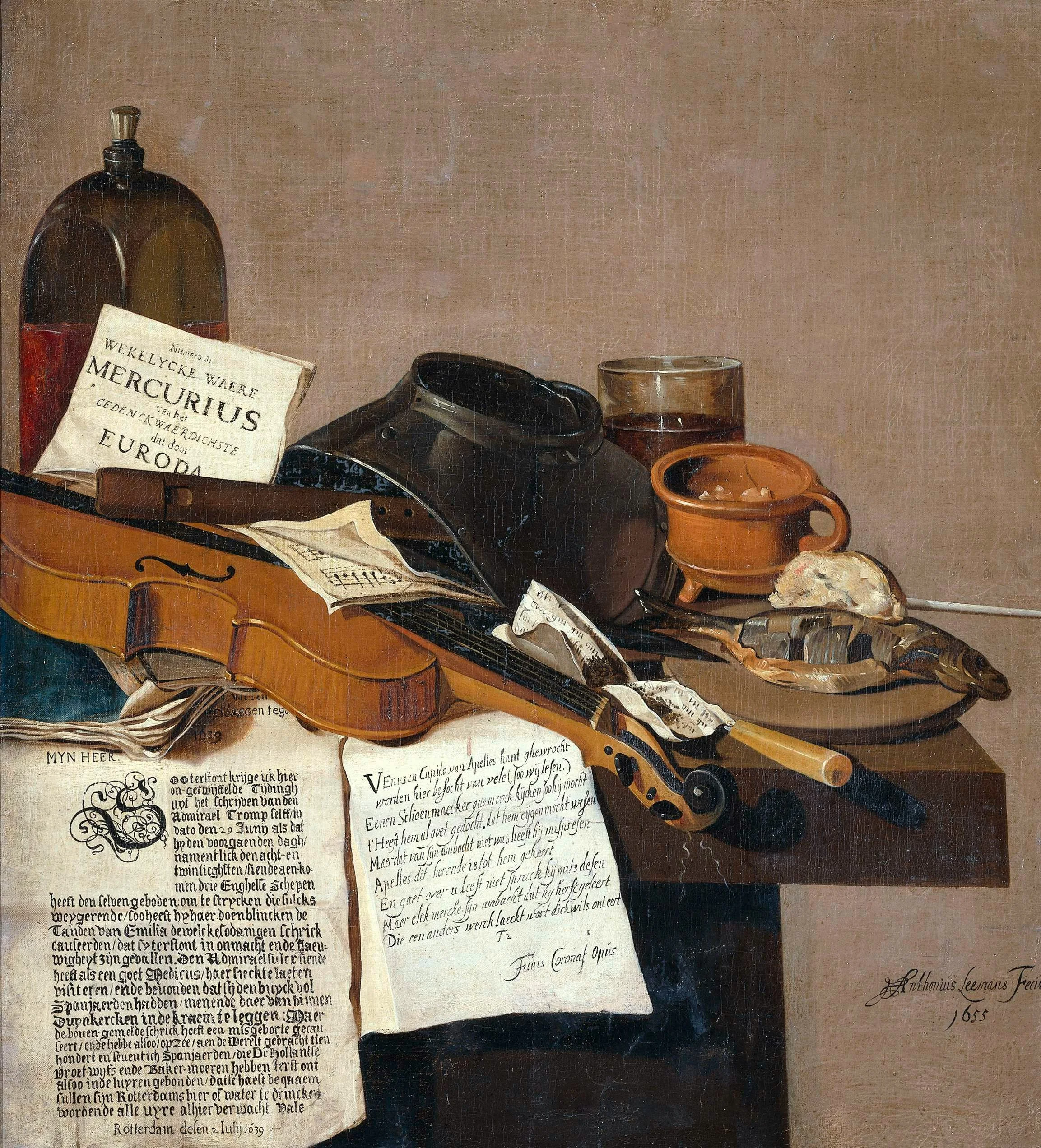
This edition of the Third Fig Review considers the topic of Lives and Letters: Poets as People. We navigate that transitional zone, poetry’s matrix and edge, where the shadow of the author falls across their writing, and where the reader’s shadow falls as well—two people from the living world attending to words that will outlive them.
It’s funny. Poems are both theirs and ours, and, in some sense, neither. Letters have an addressee. Journals and diary entries are marked by dates. Those attributes are part of their form. But poems have a complicated and awkward relationship with both their authors and their audiences. Their present moment is kind of timeless, yet they’re written into and out of the past, while they get read forever in the future. We have conversation poems and confessional poetry and verse epistles, but, however dateable and pinned-down and attached to human lives these forms are, the poems themselves are perfected and sealed-off in a way that keeps them safe. In their gift to us, they become almost sanctified, enroute to canonization if the poet’s lucky, or at least treasured in the afterlife of bookshelves and libraries (or shared ethereally online), to be read, remembered, and rediscovered by those who come after, readers for whom the life of the poet gets purged from the poem, all that scandal and grit, crosstalk and dues-paying.
As Judy Kaber writes, thinking about Edna St. Vincent Millay, “ [H]er poems are so perfect, meticulously crafted. But that’s not true of her life.”
The Third Fig Review asked Maine poets and writers to share some snapshots of their encounters with poets as people—those interactions with and connections to poets both living and dead that involve the concerns of the life we share: where and how we live, what we eat, what we spend, what we need—the stuff that in different ways we keep from our poems (but write about in letters and journals or leave behind as artifacts and ephemera).
Claire Millikin writes about Galway Kinnell’s air-conditioned apartment. Samaa Abdurraqib dreams about Audre Lorde. Elizabeth Tibbetts talks on the phone to Kate Barnes. All three poets (Kinnell, Lorde, and Barnes, each now no longer with us) transcend the moments and memories of these encounters—they belong to larger audiences, their work and influence anthologized and commemorated—but in these ordinary and personal intersections a human presence peers out over the edge of the immortalized page and looks at us, acknowledging our vulnerabilities among the things of this world where we suffer and we love.
Camden teacher Jen Munson’s discovery of Millay’s high school yearbook shows us a fascinating glimpse of a young Vincent, confident and vulnerable, the way teenagers are. Looking at Millay’s responses to the school’s Senior Class “Statistics” questionnaire, Jen reaches back across the decades to exclaim, “I knew this student. I could see Vincent sitting in my classroom today—full of life and opinions and sass.” She feels for her, how her youthful dreams “must have seemed far off and unattainable,” a girl of seventeen in Camden, Maine. And why did Vincent answer the question about her “self-estimate” with the curt pronoun “It?”
Jen’s teacherly care hears a student perhaps at risk: “What was going on in her life to make her feel that way?” There’s so much empathy in our human connectivity; we see through the sketchiness of “statistics” to complete a full person with a human face.
That funny thing about poetry, though, the way it’s ours and not ours, the way it launches into silence: it’s always an “it.”
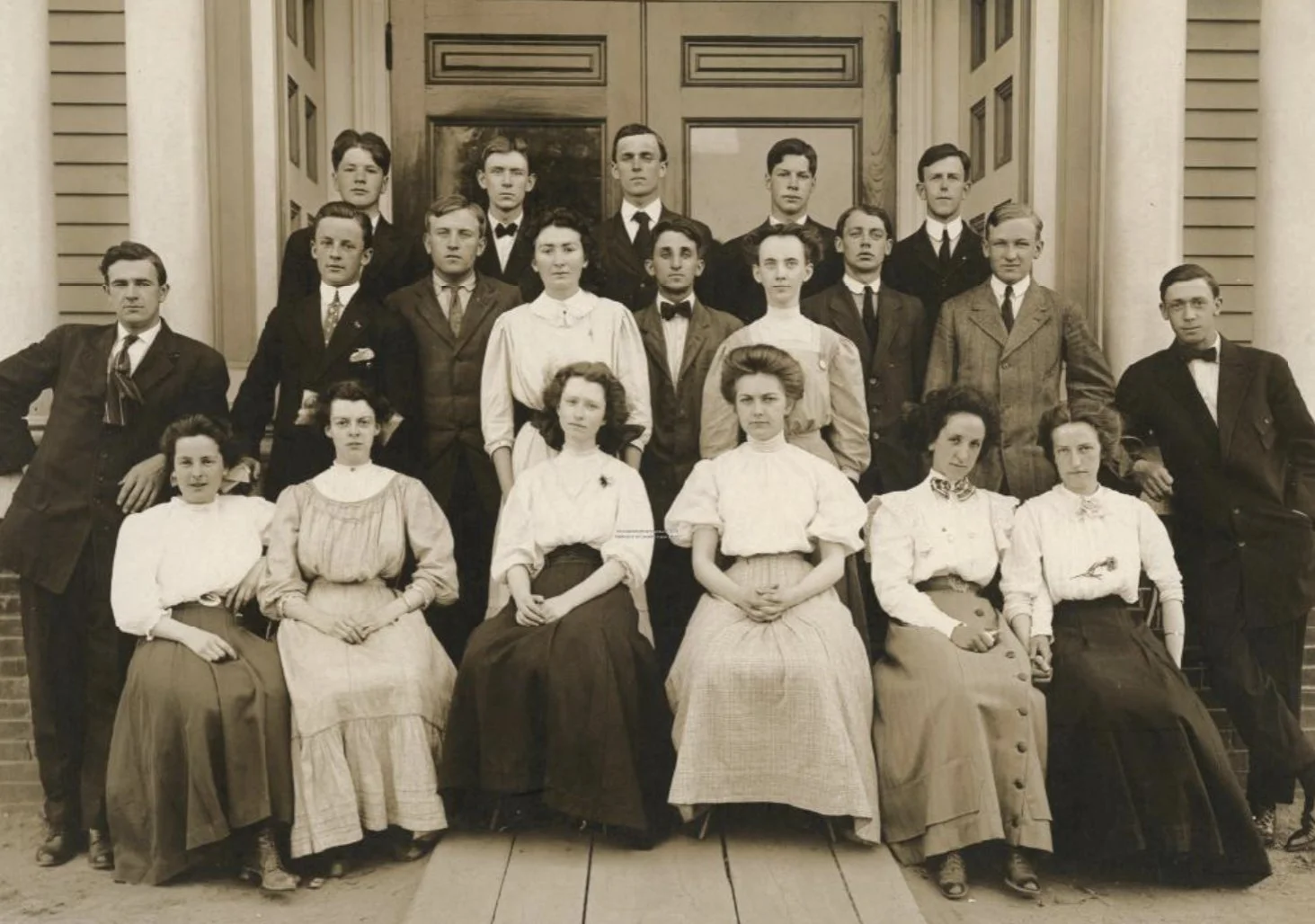
Camden High, 1909
That perfection Judy hears in a Millay sonnet, it’s part of the capacity of language to be remembered beyond the exigencies of its creation. There’s a powerful trope here: prosopopoeia—literally, to make something a person, to give it a face. It’s the ability of language to make present what’s absent or to endow an inanimate thing with a voice, the power essentially to raise the dead. And that’s what writing is always doing, while language itself is just a thing, an “it.” We imagine the writer speaking to us—in the poem they’ve just shared, maybe this morning, maybe a hundred years ago, maybe after a couple thousand years—and they’ve always already passed on from the text, the “it” that gives them voice. We take care of the poem by remembering it, taking it to heart, saving it. But what of the writer, the poet, whose hand has stopped writing? How do we make up the gaps, fill in the questionnaire, complete the picture and bring that person to life as if they could answer and tell the antecedents to all their enigmas, share “what was going on?”
Maybe Vincent’s teenage self-estimate of “It” is the “it” of “having it,” kind of like a turn-of-the-century “riz”— possessing an “alluring or magnetic personal quality,” according to the Oxford English Dictionary. This sense of a person having an “it” quality ends up influencing the idea of the “It Girl” starting in the 1920s: “A woman who is very famous, fashionable, or successful at a particular time.” Chances are, the usage also reflects something out of the “meme” culture of young people of the day—like today’s “6-7,” adults aren’t supposed to get it.
And Jen’s right as well. Even if teen Vincent was engaging some period slang in estimating herself as “It,” our vulnerability often seeks safety in irony, especially in the language and memes of young people. Kids are always at home in that linguistic exile, the monstrous ironies of creativity (just think of teenage Mary Shelley). If Gen-Z Tik-Tokers can crush on Kafka as a trope of girlhood, Millay can simultaneously be empowered and abject by making her pronoun “It.” It’s both “her” and “not her,” just like, when she became an “It Girl” in the ’20s at the height of riz and fame, her poems were both about her and not about her.
And what do we make of what seems to be a line of poetry found on a slip of paper discovered among a loved one’s possessions after they’ve died? It’s almost like a charm that might bring them back to life, expand our memory of them, keep them real, as if they were with us, sharing the secret of why it was saved. Meg Weston remembers that, after her mother’s death, a mysterious poetic quote appeared among the items found in her purse. Poetry seems so personal, so revelatory, so inescapably human, it must be a clue. Maybe it says something about her. Maybe it doesn’t.
We make poetry mean so much, but it’s really a vulnerable thing. Our care for it keeps lost voices alive to us, and that’s the most human of things.